A calm phone? 📺
Over the last couple years, I've become rapidly uninterested in the lack of innovation in consumer technology. We are clearly making our existing devices, interfaces and designs faster, slimmer, sleeker, but rarely are there genuinely novel ideas. I'd chock a lot of this up to capitalism and how monopolies loose their grip from deviation and also that the design of truly thoughtful technology probably does not make people a lot of money.
Some people are doing things
All that said, I've been really excited to see a few start ups, Kickstarters, Indiegogo campaigns have begun at least entertaining the idea that seamless, calm, less-invasive, and addictive hardware alternatives might be able to exist against the standards we interface with. Some call these "dumb-phones".
Today, smartphones as they exist in the LCD touchscreen form are not great on the eyes. LCD technology itself, while getting sharper and more vibrant, hasn't shifted far from the way it emits light into the human eyes. There aren't so many display technologies that actually interact with light naturally. The only two that I've seen so far are:
- Transflective LCDs - LCD displays that both transmit and reflect light
- E ink - Found on e-readers (like the Kindle or Kobo) or grocery store labels, physically static surfaces that reflect light (unless backlit)
- Paper
I think most tech-familiar people know something about e-readers and would likely say too that reading from their screens is a more enjoyable experience. The common pitfalls with E Ink are ghosting, low refresh rates response, and until the last year, the lack of color. Transflexive LCDs are also an older technology that I'm not as savvy to but it's been gaining interest.
Just put it in a phone!
For the device we stare at for hours a day, this technology really should matter! We should have options that are kinder on our eyes and maybe even intended to create some friction between the ways in which we can become attached to it. So of course I've been closely following potential alternatives. Here are a few that have caught my eye:
-
Light Phone - The Light Phone Inc. (US) have been around for a while in this game, maybe the longest (2015). They have beautiful marketing, design language, and ethos. Their latest phone is $800 - not a light chunk from your pocket! They've also switched to an OLED display and have a fairly locked down OS without the ability to install new apps.
Light Phone's very sleek marketing -
Daylight DC-1 - Daylight is a tablet with a transflective LCD from a new startup (US). It's intriging (but not enough to spend $700). It seems that the grainularity and display representation itself is the same as any LCD screen but with the ability for natural light able to illuminate it. It runs fairly stock Android.
-
Minimal Phone - Another startup (US), quite weak marketing, but wanted to build a chunkier Blackberry like E ink phone also running stock Android. There have been a slew of problems leading to them shipping the phone, software bugs, and the first shipment not being FCC certified until a week afterwards.
-
Mudita Kompakt - Mudita is a Polish company that has made a dumbphone in the past, but also watches, clocks, clothes and... a luxury faraday cage? Needless to say, Mudita seems the most invested in the ethos of calm technology. And their newest phone is half the price of the Light Phone and uses E ink.
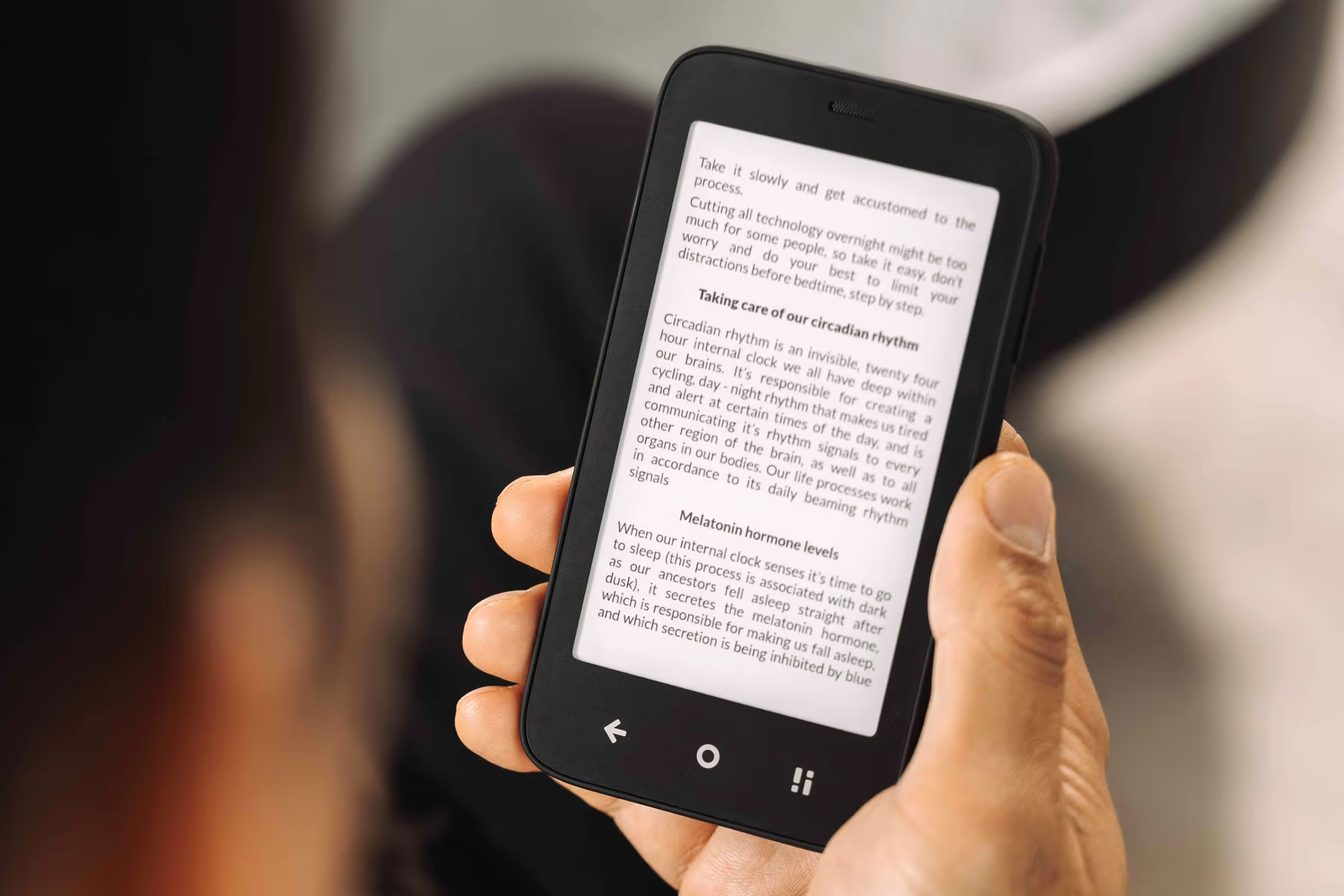
The Mudita Kompakt
In addition to these which have been marketed more towards the English speaking / Western market, there are a handful of Chinese options that are either incompatible with with North American networks or are simply software locked.
Consumers want change
I won't doubt that these are fairly niche devices for people who are ironically too immersed in technology. But I do think there's an nostalgia for the earlier forms of the devices we held. I think because they used to more like tools rather than appendages. A lot of folks are coming to the same conclusion, whether it be through research on social media addiction or how digital literacy is shockingly weak and yet most everyone owns an magic multi-tool without any guidance on using it mindfully or even sustainably.
We might not need faster phones, better cameras, or bigger/thinner screens. We likely need better strategies that make our lives easier to manage - features you can't just add to a phone. Not a bright portal in our pocket buzzing or ever-ready to beam information to us. I'm not a luddite (yet), but I do hope we can invest in calmer technology.
For those interested in more: